Which combination of vitamins and adaptogenic mushrooms is right for you?
5 Questions · Find Your Ideal Synergy in 40 Seconds
Your Vitamin + Adaptogen Cocktail
The adaptogenic mushrooms such as Chaga, Cordyceps, Lion's Mane, and Reishi have been used for thousands of years in traditional Chinese medicine to strengthen the immune system, reduce stress, and support vital functions. But it is when they are combined with essential vitamins and minerals that their potential truly shines.
Because while adaptogens set the stage by balancing the body’s response to stress, it is vitamins that provide the cellular fuel needed to transform that stability into energy, focus, and resilience. One without the other is like an engine without gas: everything is there, but nothing starts.
In this comprehensive guide, we explain in detail how the vitamins + adaptogens synergyworks, which combinations are best for your goals, and why this approach is revolutionizing natural dietary supplements.
What is an adaptogenic mushroom, and how does it work?
An adaptogenic mushroom is a natural organism that helps the body adapt to various forms of stress—physical, mental, or environmental. Unlike a traditional stimulant, an adaptogen does not force a reaction: it modulates the body’s response to restore its homeostasis (its natural balance).
Their effects are based on specific active molecules: beta-glucans (immunostimulatory polysaccharides), and triterpenes (anti-inflammatory compounds), and long-chain that support the immune response (source: International Journal of Medicinal Mushrooms, 2018).
The Four Essential Adaptogenic Mushrooms
Chaga (Inonotus obliquus) is known as the “king of antioxidants.” With an ORAC score exceeding 146,000, it far surpasses superfruits such as acai berries. It supports the immune system and protects cells from oxidative stress. A study published in the Journal of Ethnopharmacology (2011) demonstrated its significant anti-inflammatory and immunostimulatory properties.
Cordyceps (Cordyceps militaris) is the mushroom of physical endurance. It improves muscle oxygenation and the production of ATP, the energy molecule in our cells. A meta-analysis published in the Journal of Dietary Supplements (2017) confirms its positive effect on aerobic capacity and athletic performance.
Lion's Mane (Hericium erinaceus), or lion's mane, is the champion of cognitive health. It stimulates the production of NGF (Nerve Growth Factor), a nerve growth factor essential for memory and concentration. Research published in *Mycology* (2020) shows that it promotes neuroplasticity and may improve memory in adults.
Reishi (Ganoderma lucidum), known as the “mushroom of immortality” in traditional Chinese medicine, has been used for over 2,000 years for stress management and to improve sleep. Its triterpenes modulate the cortisol response, and its polysaccharides strengthen the immune response significantly (source: Pharmacology Biochemistry and Behavior, 2012).
👉 See also: Adaptogens: The Natural Secret of Athletes and High-Performing Minds
The Role of Vitamins: Essential Cellular Fuel
Vitamins aren't just a supplement—they are the metabolic fuel without which your body cannot function properly. Even with the world’s best adaptogens, if your cells lack essential micronutrients, energy won’t be produced.
Vitamin C: Immunity and Collagen Synthesis
Vitamin Vitamin C is the immune system’s number one ally. It stimulates the production of white blood cells and acts as a powerful antioxidant. But its role goes far beyond that: it is essential for synthesis of collagen, the structural protein found in the skin, tendons, and joints. Combined with Chaga (rich in antioxidants) and marine collagen, it creates a formidable anti-aging and immune-boosting trio.
👉 See also: What are the benefits of marine collagen?
B Vitamins: Energy and Neurotransmitters
The B vitamins (B5, B6, B12) are central to energy metabolism. They play a role in converting food into ATP (cellular energy) and in the synthesis of neurotransmitters such as dopamine and serotonin. Combined with Cordyceps (oxygenation) and Lion’s Mane (neuroplasticity), they form the ideal combination for concentration andenergy efficiency in everyday life.
Vitamin D: Mood and Vitality
Known as the “sunshine vitamin,” vitamin D plays a role in regulating mood, bone health, and the functioning of the immune system. In France, nearly 80% of the population is deficient in winter. Combined with Reishi, it forms an anti-stress and balancing duo that is particularly effective for managing .
Magnesium: Recovery and the Nervous System
Magnesium magnesium is involved in more than 300 enzymatic reactions. It is essential for muscle recovery, stress management, and proper nervous system function. Combined with Cordyceps for athletes, it optimizes post-workout recovery and helps prevent cramps. Its combination with Reishi promotes restful sleep and improved physical endurance.
Zinc: An Immune System Booster
The zinc is a key trace element for theimmunity and protection against oxidative stress. It plays a role in cell division and wound healing. Combined with Chaga and vitamin C, it provides the most comprehensive immune shield available to naturally strengthen your immune response.
How does the synergy between vitamins and adaptogens actually work?
When you combine adaptogenic mushrooms and natural vitamins, the effect is far greater than the simple sum of the two. This is known as synergy : each element enhances the action of the other.
Adaptogens set the stage : they reduce cortisol (the stress hormone), balance the nervous system’s response, and optimize basic metabolic functions. The body is then in a receptive state, ready to effectively utilize the nutrients it receives.
Vitamins activate processes : once the body is in balance, vitamins and minerals provide the cellular energy needed to transform this stability into actual performance. B vitamins boost ATP production, vitamin C strengthens the immune system, and vitamin D regulates mood.
|
Synergy Chart: Vitamins + Adaptogenic Mushrooms
Here is a summary of the best combinations of vitamins, minerals and adaptogenic mushrooms depending on your goals:
|
Objective |
Mushroom |
Vitamin / Mineral |
Synergy |
Key Study |
|
Immunity |
Chaga + Reishi |
Vitamin C + Zinc + Vitamin D |
Antioxidant + immunomodulator |
J. Ethnopharmacology, 2011 |
|
Energy |
Cordyceps |
B Vitamins + Magnesium |
ATP + Muscle Oxygenation |
J. Dietary Suppl., 2017 |
|
Concentration |
Lion's Mane |
B Vitamins + Zinc |
NGF + Neurotransmitters |
Mycology, 2020 |
|
Stress Relief |
Reishi |
Vitamin D + Magnesium |
Cortisol + Nervous System Balance |
Nutrients, 2019 |
|
Sports Recovery |
Cordyceps + Chaga |
Vitamin C + Collagen + Magnesium |
Tendon Regeneration + Antioxidant |
Int. J. Med. Mushrooms, 2018 |
|
Beauty / Anti-Aging |
Chaga + Reishi |
Vitamin C + Marine Collagen + Zinc |
Collagen Synthesis + Cellular Protection |
Skin Pharmacol., 2014 |
Why Wake Chose the Vitamins + Adaptogens + Collagen Formula
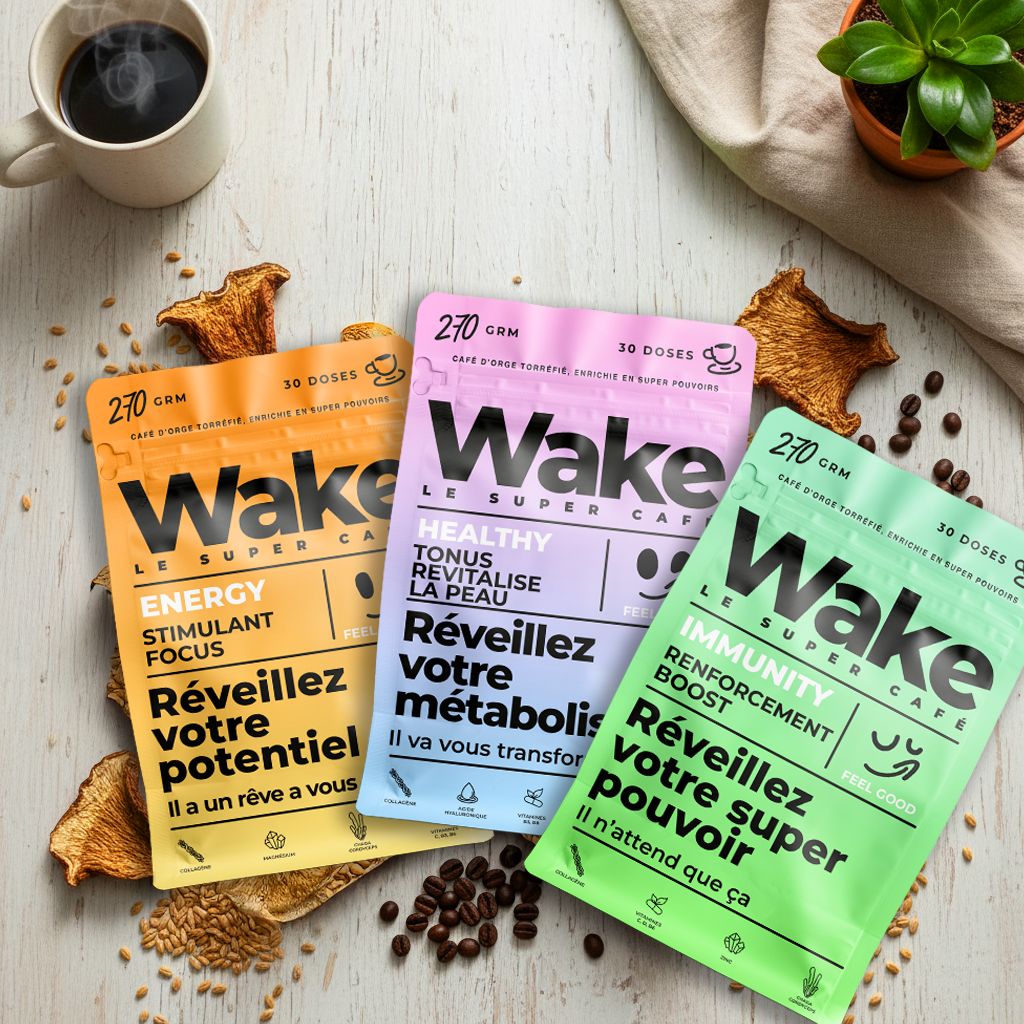
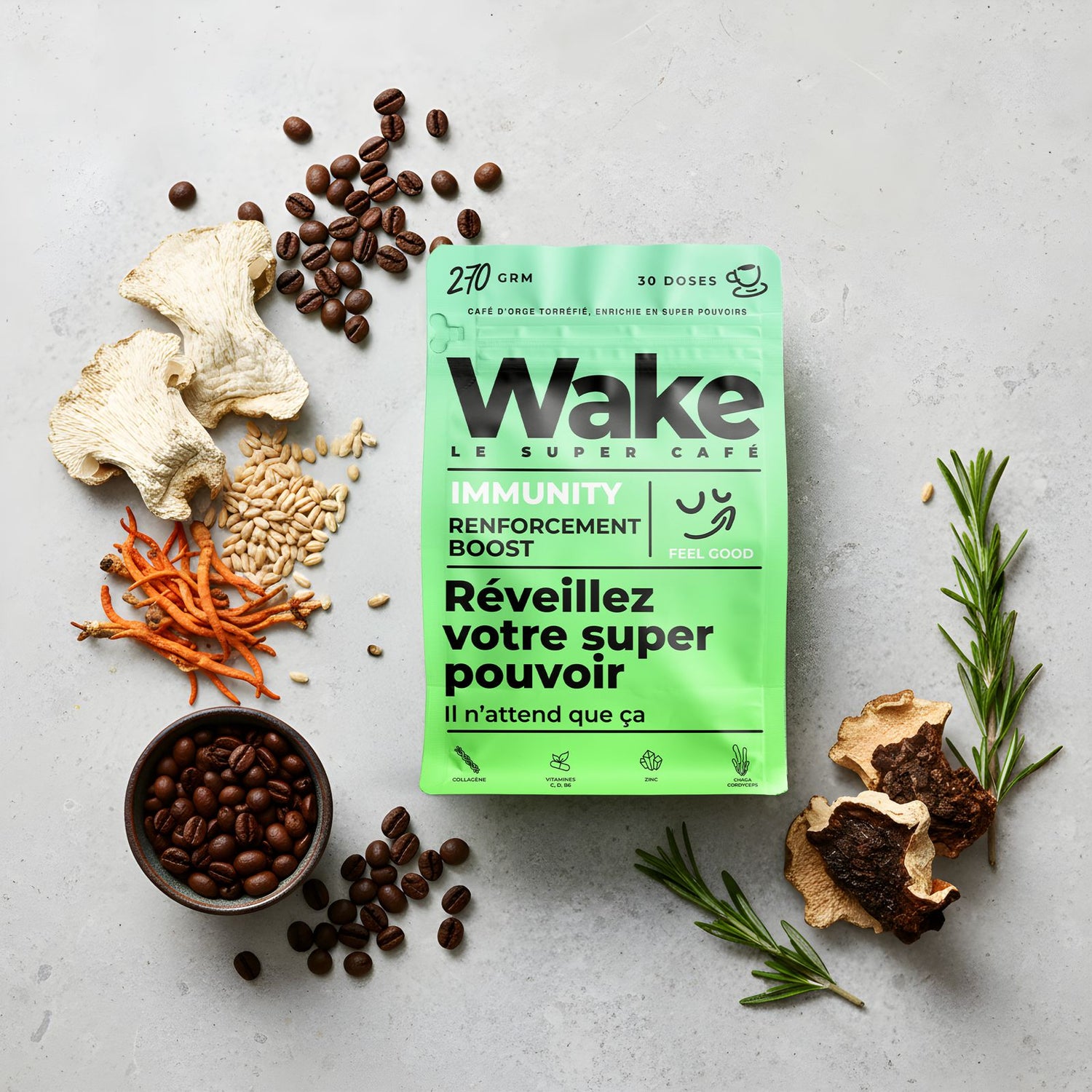
Most adaptogenic coffee blends rely solely on mushrooms, neglecting cellular nutrition. It’s like building a house without a foundation. Wake has taken a different approach: combining the three pillars of optimal health into a single formula.
Wake combines the following in every cup:
- Adaptogens (Chaga, Cordyceps, Lion's Mane) — concentration, endurance, stress management.
- Marine collagen — skin, joints, muscle recovery.
- Essential vitamins and minerals — deep cellular nutrition.
The result? A well-rounded energy that comes from within the body, not from a simple stimulant. No crash, no crash: just lasting clarity, natural focus, and overall well-being. With 3 to 10 times less caffeine than a regular cup of coffee, Wake provides a steady boost without jitters.
👉 See also: Why Too Much Caffeine Is Bad for Your Health (and How Wake Does It Better)
FAQ · Vitamins and Adaptogenic Mushrooms
What are the benefits of adaptogenic mushrooms?
Adaptogenic mushrooms offer a wide range of benefits: strengthening the immune system (Chaga, Reishi), improved physical endurance (Cordyceps), support for cognitive health and memory (Lion’s Mane), and reduced chronic stress (Reishi). Their active compounds—beta-glucans, triterpenes, and polysaccharides—work synergistically to support the body’s homeostasis.
Can you take adaptogenic mushrooms every day?
Yes, and it's even recommended. Adaptogenic mushrooms such as Chaga, Cordyceps, Lion’s Mane, and Reishi are intended for daily use. Their effects build up over time. A course of at least 8 to 12 weeks is recommended to see significant results in terms of immunity, energy, and concentration.
How do you choose between the different varieties?
The choice depends on your main goal. For immunity, opt for Chaga and Reishi. For energy and sports, Cordyceps is ideal. For concentration and memory, try Lion's Mane. And for stress and sleep, Reishi is your best ally. Ideally, combine several mushrooms to reap the full range of benefits.
What is the difference between a traditional supplement and a formula containing adaptogens?
A traditional supplement provides vitamins or minerals in isolation. A formula with adaptogens goes a step further by combining these micronutrients with functional mushrooms that optimize the body’s ability to utilize them. The vitamin-adaptogen synergy offers greater efficacy than the simple sum of its ingredients.
How can you incorporate vitamins and adaptogens into your routine?
The easiest way is to choose an all-in-one package like Wake, which combines adaptogens, vitamins, and marine collagen in a daily cup of coffee. No need for multiple capsules or complicated dosages: just one cup in the morning is enough to reap the full benefits of these synergies.
Are adaptogenic mushrooms safe?
The main adaptogenic mushrooms (Chaga, Cordyceps, Lion's Mane, Reishi) are considered safe by the scientific community. They have been used for millennia in traditional Chinese medicine. However, if you are undergoing medical treatment or are pregnant, it is recommended that you consult a healthcare professional.
What are the effects on memory and concentration?
Lion's Mane is the most widely studied mushroom for its cognitive effects. Clinical studies show an improvement in memory and concentration after 4 to 8 weeks of regular supplementation. When combined with B vitamins and zinc, these effects are enhanced by support for neurotransmitters.
Are adaptogens effective at boosting immunity?
Yes. Chaga and Reishi are among the most extensively studied natural immunostimulants. Their beta-glucans activate natural killer cells and macrophages, the body’s first lines of defense. When combined with vitamin C, zinc, and vitamin D, they form a comprehensive immune shield.
👉 See also: Why Traditional Coffees Make You Tired (and How Wake Changes Everything)
Scientific Sources
- Park Y.M. et al. (2011). “Anti-inflammatory and immunomodulatory activities of Inonotus obliquus.” Journal of Ethnopharmacology.
- Hirsch K.R. et al. (2017). “Cordyceps militaris improves tolerance to high-intensity exercise.” Journal of Dietary Supplements.
- Li I.C. et al. (2020). “Neurohealth properties of Hericium erinaceus mycelia.” Mycology.
- Cui X.Y. et al. (2012). “Extract of Ganoderma lucidum promotes sleep.” Pharmacology, Biochemistry, and Behavior.
- Proksch E. et al. (2014). “Oral supplementation with specific collagen peptides has beneficial effects on skin physiology.” Skin Pharmacology and Physiology.
- Wasser, S.P. (2018). “Medicinal Mushroom Science: Current Perspectives.” International Journal of Medicinal Mushrooms.
This article is provided for informational purposes only and is not a substitute for medical advice. If you have any questions, consult your doctor or healthcare professional.