Calculate Your Daily Caffeine Intake
5 questions · your personalized assessment in 45 seconds
Breakdown of Your Estimated Usage
With Wake, your day would look like this
Do you drink three, four, or five cups of coffee a day without even thinking about it? You’re not alone. In France, average coffee consumption totals 5.4 kg per person per year, or about 3 cups a day (source: International Coffee Organization, 2023). And according to theANSES, nearly 30% of French adults exceed the caffeine intake limits recommended by health authorities.
The problem is that caffeine has a dark side that we tend to underestimate. Sleep disturbances, anxiety, heart palpitations, addiction… the effects of excessive coffee consumption are well documented by science. Yet for many, giving up their morning coffee ritual seems unthinkable.
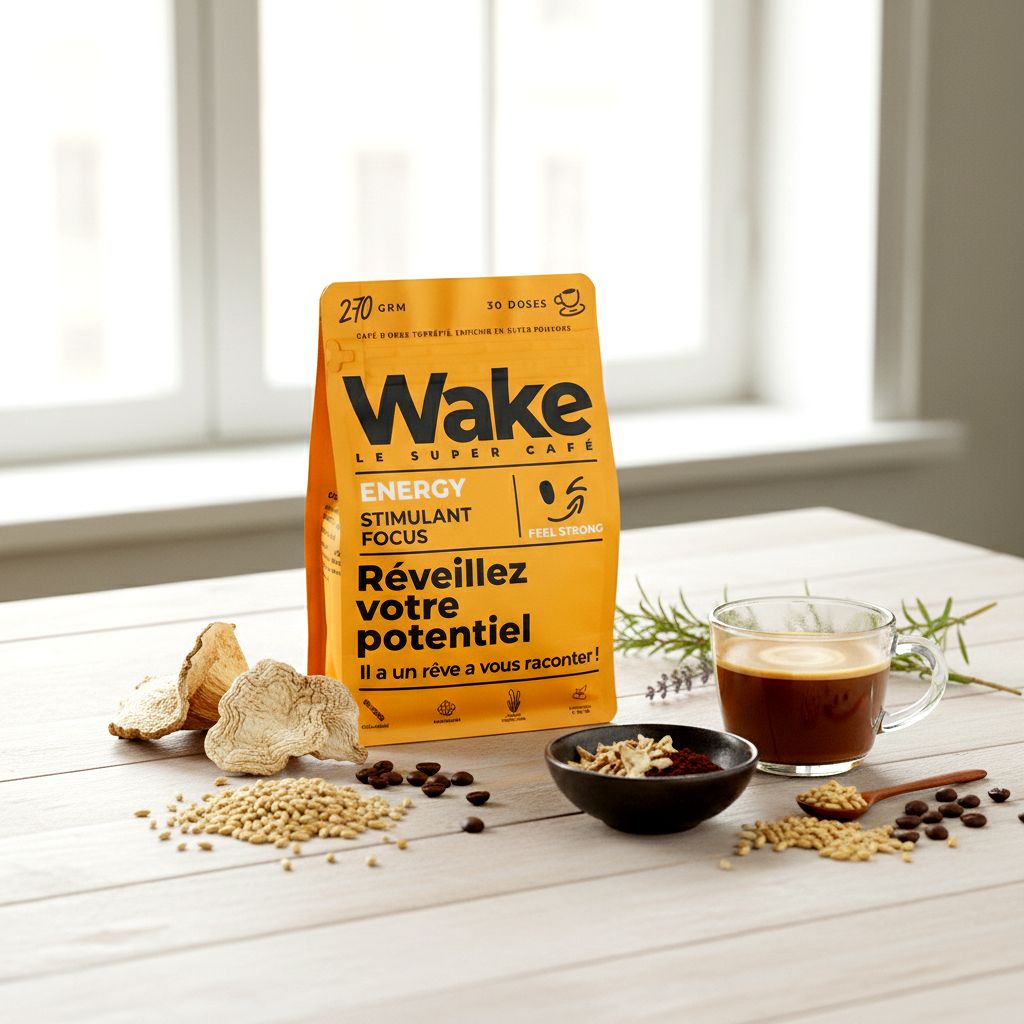
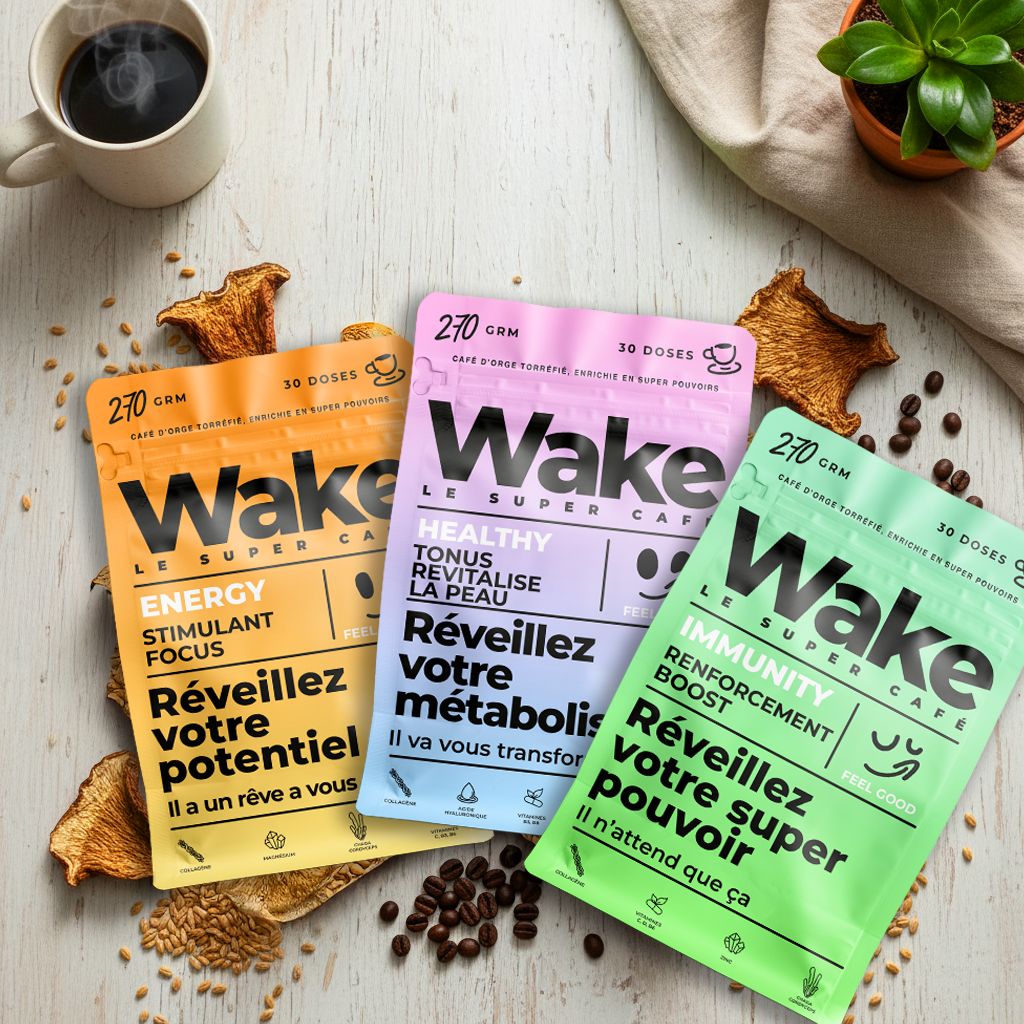
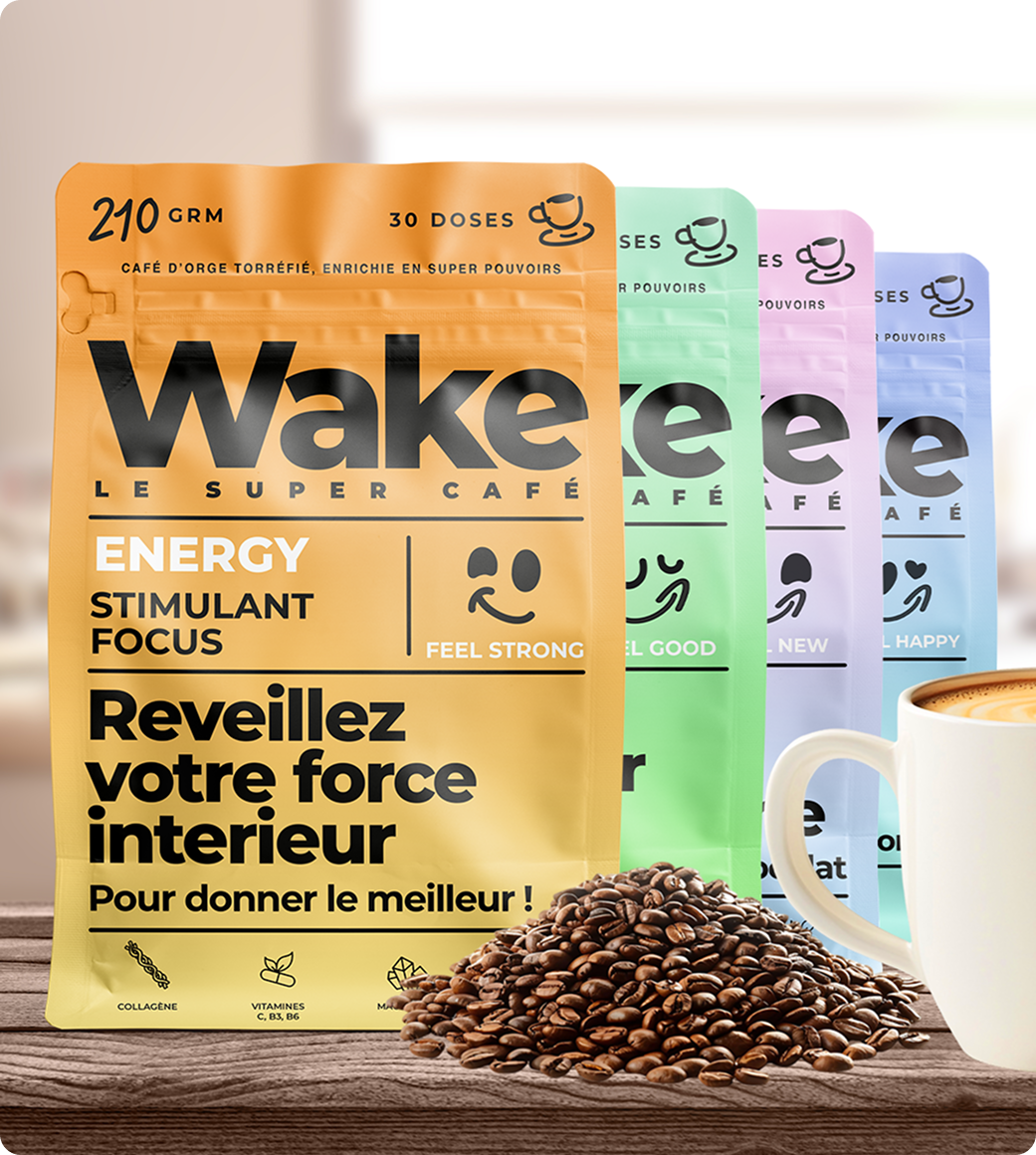
What if the real question weren't "Should we give up coffee?" but rather "How can we maintain our energy without the harmful effects of caffeine?" That's exactly what Wake offers—an coffee alternative designed to provide a steady energy boost without the downsides of a massive dose of caffeine.
How does caffeine affect your body?
To understand why too much coffee is a problem, you first need to understand how caffeine works in the body.
The mechanism: blocking fatigue without eliminating it
Caffeine acts primarily by binding to adenosine receptors in the brain. Adenosine is a neuromodulator that naturally builds up throughout the day and signals to the body that it is time to rest. By blocking these receptors, caffeine prevents the fatigue signal from reaching the brain—but it does not eliminate the fatigue itself.
The result: You feel awake, but your body continues to wear itself out behind the scenes. This is what researchers call “ hidden sleep debt .”
The effect on cortisol and adrenaline
Caffeine also stimulates the production of cortisol (the stress hormone) andadrenaline. In moderate doses, this results in a boost of energy. But when consumed in excess, this chronic stimulation leads to a state of constant stress.
A study by Lovallo et al. in *Pharmacology, Biochemistry, and Behavior* (2005) showed that a dose of 300 mg of caffeine significantly increased cortisol levels, doubling the stress response compared to the placebo group.
Tolerance: The Trap of Escalation
Over time, the brain adapts to caffeine by producing more adenosine receptors. This is the mechanism of tolerance, as described in detail by theEFSA (2015), which explains why a cup of coffee “doesn’t do anything anymore” after a few weeks.
The 7 Health Effects of Excess Caffeine
European health authorities (EFSA) and French (ANSES) set the safety threshold at 400 mg of caffeine per day for a healthy adult.
1. Sleep Disorders and Sleep Debt
This is the best-established effect. Caffeine has a half-life of 5 to 6 hours. If you drink a cup of coffee at 3 p.m., half of its caffeine will still be in your system by 9 p.m.
A study by Drake et al. in the Journal of Clinical Sleep Medicine (2013) showed that consuming 200 mg of caffeine even 6 hours before bedtime significantly disrupted sleep.
|
2. Anxiety and Nervousness
TheEFSA has identified anxiety as one of the primary adverse effects. According to theANSES, approximately 30% of the French adult population exceeds the threshold at which caffeine causes anxiety. At doses of 600 mg/day, symptoms such as nervousness, restlessness, and difficulty relaxing are observed.
3. Heart palpitations and cardiovascular risks
In cases of excessive consumption (more than 400 mg/day), theANSES warns of an increased risk of tachycardia and premature beats.
4. Digestive Disorders
Coffee stimulates the production ofstomach acid, causing heartburn and acid reflux. In people with IBS or gastritis, drinking too much coffee significantly worsens symptoms.
5. Dehydration and Mineral Loss
Caffeine has a moderate diuretic effect that accelerates the loss of water and essential minerals such as calcium, magnesium, and potassium. For athletes, this effect, combined with sweating, can lead to cramps and decreased performance.
👉 See also: Adaptogens: The Natural Secret of Athletes and High-Performing Minds
6. Addiction and Withdrawal Symptoms
TheWHO recognizes caffeine dependence as a clinical syndrome (ICD-11 classification). Withdrawal symptoms appear 12 to 24 hours after the last dose and last from 2 to 9 days.
|
7. Effects on Fertility and Pregnancy
TheWHO and theEFSA recommend that pregnant women limit their intake to no more than 200 mg of caffeine per day. TheANSES extends this recommendation to breastfeeding women and children.
How Much Caffeine Is in Your Cup? A Comparison
Comparison table based on data from theEFSA and theANSES :
|
Drink |
Caffeine / serving |
To reach 400 mg |
|
Espresso (30 ml) |
60–80 mg |
5 to 7 espressos |
|
Filter coffee (200 ml) |
90–120 mg |
3 to 4 cups |
|
Black tea (200 ml) |
30–50 mg |
8 to 13 cups |
|
Energy Drink (250 ml) |
80 mg |
5 cans |
|
Coca-Cola (330 ml) |
32 mg |
12 cans |
|
Wake (1 cup) |
10–30 mg |
13 to 40 cups |
With Wake, it's virtually impossible to consume too much caffeine, even if you drink several cups a day.
Cutting Back on Coffee: Where to Start?
Step 1: Assess your actual consumption
Count all your sources of caffeine over the course of a typical day. Most people underestimate their total intake by 30 to 50 percent.
Step 2: Gradually reduce
TheANSES recommends cut back gradually. Cut back by half a cup per week, starting by cutting out your afternoon coffees.
Step 3: Replace Wisely
This is the step where most people fail. Wake offers the taste, ritual, and energy of coffee—with 3 to 10 times less caffeine.
👉 See also: Why Traditional Coffees Make You Tired (and How Wake Changes Everything)
Wake: The Game-Changing Alternative to Coffee
While a traditional coffee relies entirely on a massive dose of caffeine (80–120 mg per cup), Wake takes a radically different approach.
What Makes Wake Different
Wake contains only 10 to 30 mg of caffeine per cup. The energy comes from functional nutrients that work in synergy:
- Adaptogens (Chaga, Cordyceps, Lion’s Mane) - concentration, endurance, stress management.
- Marine collagen - skin, joints, muscle recovery.
- Essential Vitamins and Minerals - comprehensive nutrition.
👉 See also: Why Combining Vitamins and Adaptogenic Mushrooms Makes All the Difference
Wake vs. Traditional Coffee: A Comparison
|
Criterion |
Classic Coffee |
Wake |
|
Caffeine per cup |
80–120 mg |
10–30 mg |
|
Type of Energy |
A quick spike followed by a crash |
Progressive and stable |
|
Adaptogens |
- |
Chaga, Cordyceps, Lion’s Mane |
|
Marine collagen |
- |
Included |
|
Vitamins & Minerals |
- |
Included |
|
Risk of addiction |
High |
Very low |
|
Effect on Sleep |
Disruptor |
Minimal |
|
Effect on Stress |
Increases cortisol |
Reduces stress |
👉 See also: What are the benefits of marine collagen?
FAQ · Too Much Coffee and Alternatives to Coffee
How many cups of coffee can you safely drink per day?
TheEFSA sets the limit at 400 mg of caffeine per day for a healthy adult, which is equivalent to 4 to 5 cups of filter coffee. For pregnant women: 200 mg/day.
What are the first signs of caffeine overconsumption?
Difficulty falling asleep, nervousness, heart palpitations, headaches, digestive problems, a strong craving for coffee as soon as you wake up. If you check more than two of these symptoms, you’re probably exceeding your limit.
Is caffeine dangerous to your health?
In moderate doses (200–300 mg/day), caffeine is safe, according to the EFSA. It is chronic consumption in excess of 400 mg per day that poses a problem.
How can I quit drinking coffee without feeling tired?
Cut back by half a cup a week. Switch to Wake, which preserves the taste and ritual while cutting the caffeine by 3 to 10. Withdrawal symptoms last 2 to 9 days.
Does Wake contain caffeine?
Yes, between 10 and 30 mg per cup —3 to 10 times less than a regular cup of coffee. The rest of the energy comes from adaptogens, marine collagen, and vitamins.
Can you drink Wake in the evening?
Thanks to its very low content (10–30 mg), Wake has a minimal impact on sleep. If you’re very sensitive, it’s best to consume it before 5 p.m.
Scientific sources:
- ANSES (2013). “Risk Assessment of the Consumption of So-Called Energy Drinks.” ANSES Opinion, collective expert report.
- EFSA (2015). “Scientific Opinion on the Safety of Caffeine.” EFSA Journal, 13(5):4102.
- Lovallo, W.R. et al. (2005). “Cortisol responses to mental stress, exercise, and meals following caffeine intake.” Pharmacology, Biochemistry, and Behavior, 83(3), 441–447.
- World Health Organization. “Caffeine dependence.” ICD-11 Classification.
- International Coffee Organization (2023). Annual Report on Global Coffee Consumption.
- Drake, C. et al. (2013). “Caffeine effects on sleep when taken 0, 3, or 6 hours before bedtime.” Journal of Clinical Sleep Medicine, 9(11), 1195–1200.
This article is provided for informational purposes only and is not a substitute for medical advice. If you have any questions, consult your doctor or healthcare professional.